close
Choose Your Site
Global
Social Media
Views: 123 Author: Site Editor Publish Time: 2026-09-30 Origin: Site
Drilling top-hole sections presents a critical operational risk. Operators face severe danger from shallow gas kicks before setting the surface casing. At this vulnerable stage, you cannot rely on a primary blowout preventer. You need a dedicated solution to handle unexpected wellbore surges. A drilling diverter serves this exact purpose. It closes securely around the drill string when a kick occurs. Instead of containing the pressure, it safely routes hazardous wellbore fluids away from the rig floor. This protects both your personnel and your structural assets.
Selecting the right equipment requires a strict engineering approach. Procurement teams must balance bore size, pressure ratings, and rig integration capabilities. You must align these technical specifications to ensure absolute safety and strict API compliance. Failing to properly size this equipment leaves the rig completely exposed. In this guide, we explore how to configure the right system for your upcoming drilling campaign.
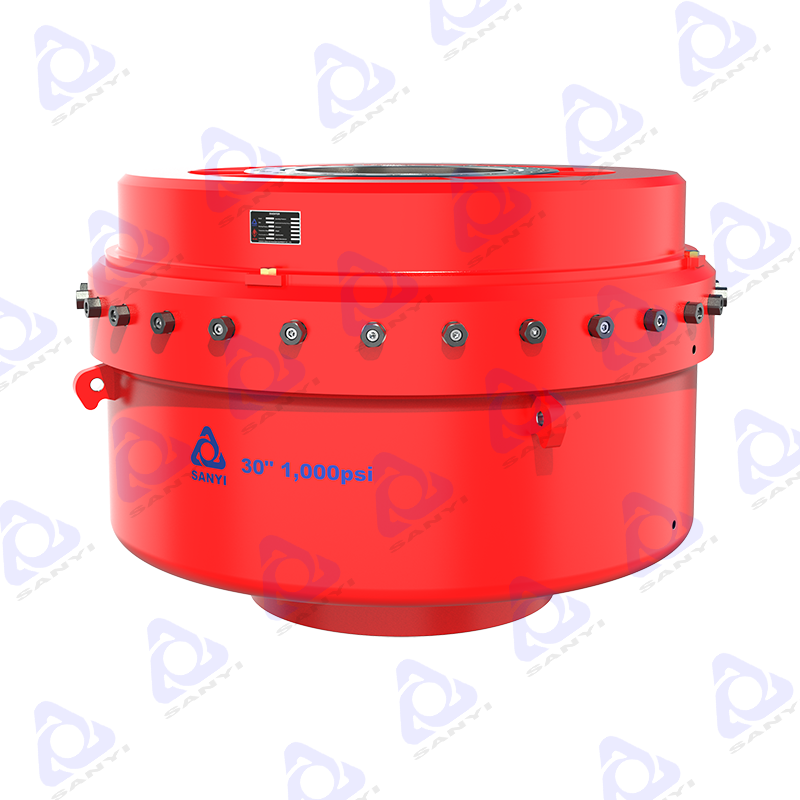
A drilling diverter system acts as the first line of defense during top-hole drilling, directing shallow gas and fluids away from the rig rather than shutting in the well.
Selection relies heavily on matching internal bore sizes (often up to 49-1/2") and low-to-moderate pressure ratings (typically 500–2,000 PSI) with specific rig architecture.
Choosing between standard and custom drilling diverters depends on rig floor height, rotary table dimensions, and existing vent line infrastructure.
Partnering with an OEM-certified diverter equipment supplier reduces implementation risks, ensuring API compliance and reliable aftermarket maintenance.
Many industry professionals confuse top-hole routing equipment with standard blowout preventers. They perform entirely different functions. A drilling diverter system focuses entirely on controlled redirection. It never attempts to contain extreme wellbore pressure. Shutting in a well during a shallow gas kick usually fractures the fragile upper formations. This creates an underground blowout. Instead, a well control diverter gives the gas a path of least resistance. It routes dangerous fluids overboard or to a safe flare pit.
Table 1: Functional Comparison Between Diverters and Blowout Preventers
Feature | Diverter System | Blowout Preventer (BOP) |
|---|---|---|
Primary Goal | Redirect hazardous flow | Contain and seal pressure |
Pressure Range | 500 to 2,000 PSI | 5,000 to 15,000+ PSI |
Deployment Phase | Top-hole drilling (pre-casing) | Deep drilling (post-casing) |
Action on Kick | Closes annulus, opens vent lines | Closes annulus, seals completely |
To achieve this redirection, the assembly relies on several core components. We must understand how these parts interact to maintain rig safety.
Housing Assembly: The main structural body mounts directly beneath the rotary table. It supports the internal components.
Packer Insert: This massive elastomeric element closes around the drill pipe. It can also seal an open hole if necessary.
Vent Line Outlets: Large diameter ports direct the flow away from the rig structure.
Hydraulic Control System: The control panel manages the rapid sequencing of valves and packer inflation.
The mechanical sequence during a kick must occur flawlessly. Human error during this phase often leads to catastrophic rig damage. The operation follows a strict chronological order. First, the driller activates the control panel. Second, the system opens the overboard vent lines. Third, the annular packing element inflates to seal around the drill string. You must ensure the vent lines open before the packer fully seals. Otherwise, the sudden pressure spike will compromise the wellbore integrity.
An oilfield diverter plays a mandatory role in various drilling environments. You will find them deployed heavily in both onshore and offshore operations. Their primary application centers around the most unpredictable phase of well construction.
Offshore top-hole drilling presents the greatest risk for shallow gas encounters. Jack-up rigs, semi-submersibles, and drillships all require this protection. Operators drill the initial hundreds of feet before deploying the marine riser. They also have not installed the subsea BOP yet. The crew remains highly vulnerable. The system provides the only structural barrier between a gas pocket and the rig floor.
Shallow gas mitigation represents the ultimate emergency use case. When a bit penetrates a high-pressure shallow gas pocket, the gas expands rapidly up the annulus. If you attempt to shut the well in, the gas will migrate outside the conductor pipe. It will boil up directly under the rig foundation. This phenomenon causes structural foundation blowouts. Offshore rigs can completely capsize in this scenario. The assembly prevents this by channeling the gas horizontally through massive vent lines.
Beyond emergency mitigation, operators use this equipment every single day. It manages routine drilling mud returns. The housing sits below the rotary table. It acts as a large funnel. It collects the returning drilling fluid. Gravity then directs this fluid through a flow line directly to the shale shakers. This everyday utility makes it an indispensable piece of rig equipment.
Chart: Application Frequency by Operation Type
Application Category | Frequency of Use | Risk Mitigated |
|---|---|---|
Routine Mud Returns | Continuous (Daily) | Fluid loss, rig floor contamination |
Offshore Shallow Gas Routing | Emergency Only | Rig capsizing, foundation blowout |
Onshore Gas Mitigation | Emergency Only | Pad cratering, localized fires |
You cannot simply order an off-the-shelf unit and expect it to fit. Rig structures vary wildly. Selection requires a deep dive into dimensional tolerances, pressure limits, and regulatory frameworks.
The internal bore size dictates the physical limitations of your top-hole operations. You must evaluate the required clearance for large-diameter casing strings. The system must also pass massive drill bits and specialized running tools. If the internal diameter restricts your casing design, you will face costly operational delays.
Industry manufacturers standardize housing sizes against common rotary table dimensions. Typical bore sizes include 21-1/4", 29-1/2", 47", and 49-1/2". A 49-1/2" model provides maximum flexibility for deepwater drillships. Conversely, a 21-1/4" unit often satisfies the requirements for standard onshore pad drilling. You must audit your planned casing program. Ensure the chosen bore size accommodates the largest outer diameter tool in your string.
Pressure ratings separate top-hole equipment from deep-well BOPs. Defining the working pressure thresholds keeps your operations safe. Common models operate between 500 PSI and 2,000 PSI. You must match this rating to your expected shallow formation pressures.
Sometimes operational parameters push the boundaries of standard equipment. You might drill in a known high-pressure shallow zone. In these rare instances, you require a high pressure diverter. These units bridge the gap between simple routing and minor containment. They often feature reinforced housings. They utilize upgraded elastomeric compounds. Carefully review your offset well data. If neighboring wells exhibit aggressive shallow gas gradients, upgrade your pressure rating accordingly. Never underestimate top-hole pressure surges.
Regulatory bodies enforce strict manufacturing and deployment standards. You must ensure your selected equipment complies with all relevant API specifications. Failing an API audit leads to immediate rig shutdown.
API Spec 16F governs marine drilling riser equipment. It dictates how the unit integrates with offshore riser systems. API 16A covers drill-through equipment broadly. It outlines the specific testing and metallurgical requirements for the housing and packer elements. Furthermore, you must consider the operating environment. If you anticipate sour gas, you need NACE MR0175 compliance. This standard ensures the steel alloys resist hydrogen sulfide (H2S) stress corrosion cracking. Always demand material certificates from your manufacturer.
Rig designs dictate whether you can use a standardized model. Sometimes, operators must engineer a bespoke solution. Understanding the difference prevents costly integration failures.
Standard systems work best for conventional onshore rigs. They also fit standardized jack-up designs perfectly. These rigs feature predictable nipple-up heights. They utilize standard flow line angles. Buying a standard unit reduces lead times significantly. You benefit from proven engineering designs. Spare parts remain readily available across global supply chains.
However, older rigs or specialized floaters often require a custom drilling diverter. Tight substructure constraints force operators to modify the housing height. You might encounter non-standard outlet angles due to existing vent line architecture. Sometimes, you need specific hydraulic control integrations to match a legacy control panel. A custom approach solves these geometric clashes perfectly.
You must address the implementation risks associated with custom engineering. Bespoke designs require extensive 3D modeling. This increases upfront engineering costs. Lead times stretch from weeks to several months. You also risk complications during the factory acceptance testing phase. Always weigh the cost of a custom unit against the cost of modifying the rig substructure to accept a standard model. Often, modifying the rig flow lines proves cheaper than machining a custom housing.
Your safety relies entirely on the manufacturing quality of the equipment. Choosing the right partner matters just as much as choosing the right technical specifications. A reputable diverter equipment supplier provides transparency, testing, and lifecycle support.
First, verify their manufacturing and testing capabilities. You must insist on rigorous factory acceptance testing (FAT). The supplier should perform comprehensive hydrostatic pressure testing on the housing. They must also conduct function tests on the packer element. Request video documentation of these tests if you cannot attend in person. You need absolute proof the unit holds pressure before it ships.
Second, assess their aftermarket support network. Rig downtime costs tens of thousands of dollars per day. You cannot afford to wait weeks for consumable parts. Check their inventory of replacement packer elements and seal kits. Ensure they stock the necessary deployment tools. A strong supplier maintains strategic hubs near major drilling basins to facilitate rapid part deployment.
Finally, demand transparent field history. Ask for comprehensive material traceability reports. You want to see case studies of successful deployments. If you operate a harsh weather offshore rig, ask for examples in similar environments. Do not accept onshore pad drilling case studies for a North Sea application. The supplier must prove their equipment survives your specific operational reality.
Choosing top-hole routing equipment represents a major engineering decision. It directly impacts rig safety and regulatory compliance. The initial drilling phases remain incredibly vulnerable to shallow gas kicks. A properly sized unit ensures you can route these hazards away from your personnel safely.
Operators and procurement teams should audit their current rig floor dimensions immediately. Assess your potential shallow gas risks using recent geological data. Consult your engineering teams to determine the precise internal bore size and pressure rating required for your next well. Do not leave this decision to the last minute.
Take proactive steps to protect your rig. Contact an engineering specialist today. Request a technical consultation and quote for your next drilling campaign. Ensure your primary line of defense stands ready before the bit even turns.
A: A blowout preventer is designed to completely shut in a well and contain extreme high pressure (up to 15,000+ PSI). A diverter is designed for low-pressure top-hole drilling. It does not shut in the well. Instead, it closes the annulus and redirects shallow gas and fluids away from the rig floor through large vent lines.
A: Standard systems typically range between 500 PSI and 2,000 PSI. This lower rating accommodates the fragile nature of shallow formations. Containing higher pressures at shallow depths usually causes the formation to fracture, leading to dangerous underground blowouts and structural instability.
A: You must inspect the elastomeric packer elements between every well. API recommended practices dictate routine function testing during drilling operations. Wear-and-tear depends heavily on the volume of drilling mud returns and the abrasiveness of the cuttings. Replace the element immediately if you observe severe gouging or loss of elasticity.
A: Yes, you can retrofit these systems to older rigs. However, spatial constraints under the rotary table often require careful engineering. You might need substructure modifications or a custom-machined housing to align with existing vent lines and control panel infrastructure.